U.S. Department of Transportation
Federal Highway Administration
1200 New Jersey Avenue, SE
Washington, DC 20590
202-366-4000
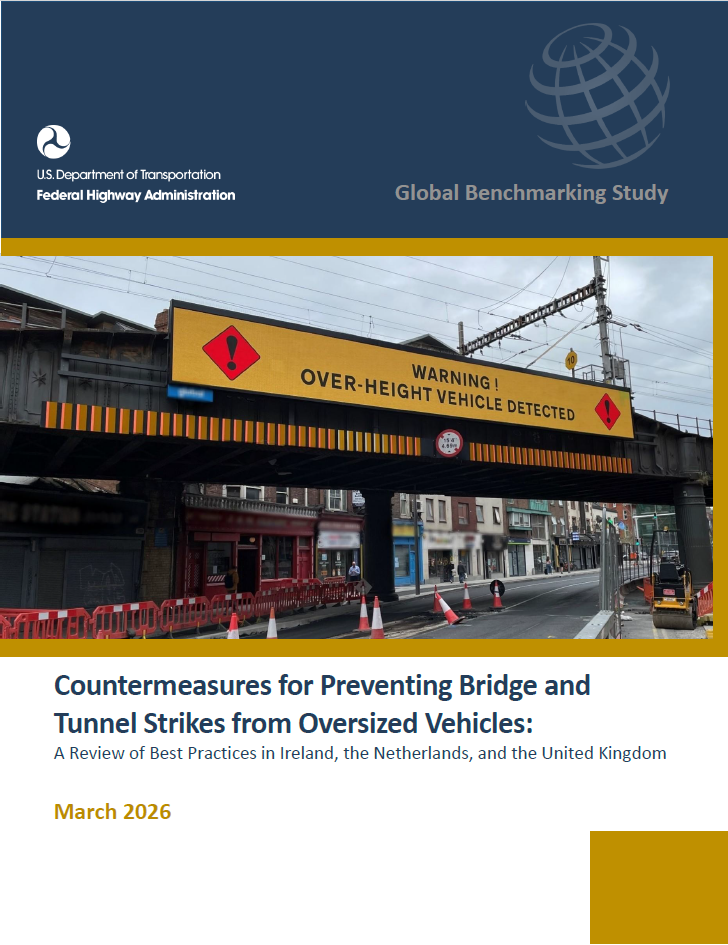
Bridge strikes are one of the leading causes of damage to bridges and resulting disruption to traffic. Oversized trucks, or the inadvertently raised portions of cargo such as dump beds or crane booms, frequently strike bridges and tunnels, causing considerable damage to infrastructure, traffic delays, and rerouting of traffic to remove the truck and repair damage. At worst, bridges can fail, potentially resulting in deaths and injuries and costly economic and quality of life impacts for entire regions until the facility can be reopened to traffic.
The purpose of this study is to (1) identify and evaluate proven countermeasures, emerging practices and research plans, and technologies used in other countries to reduce the incidence and consequences of trucks striking bridges and tunnels; (2) provide an understanding of effective mechanisms used to deploy these strategies; (3) identify better data collection and connection frameworks to aid in decision-making; and (4) bring this information to U.S. states to advance the state of the practice. This report presents the range of countermeasures observed in Ireland, the Netherlands, and the United Kingdom, insights and lessons learned, and how they can be applied in the U.S. to effectively reduce bridge and tunnel strikes.





